Complete Campus Placement Preparation Guide for Freshers
By FreePare Team · Fri Jun 12 2026 · 14 min read

Campus placements are one of the most important phases in a student’s college journey. For many freshers, this is the first serious step toward starting a professional career. But the process can feel confusing when you do not know where to begin.
Some students start with aptitude. Some focus only on coding. Some prepare their resume at the last moment. Some keep taking mock tests without understanding their mistakes. This is why a clear preparation roadmap is important.
This guide will walk you through everything you need to know about campus placement preparation, including important rounds, required skills, subject-wise preparation, mock test strategy, resume readiness, interview preparation, and a simple study plan for freshers.
FreePare is built around the same structured preparation idea, where students can choose an exam branch, select subjects, attempt topic-wise tests, review progress, and continue practice in a focused way.
What is Campus Placement?
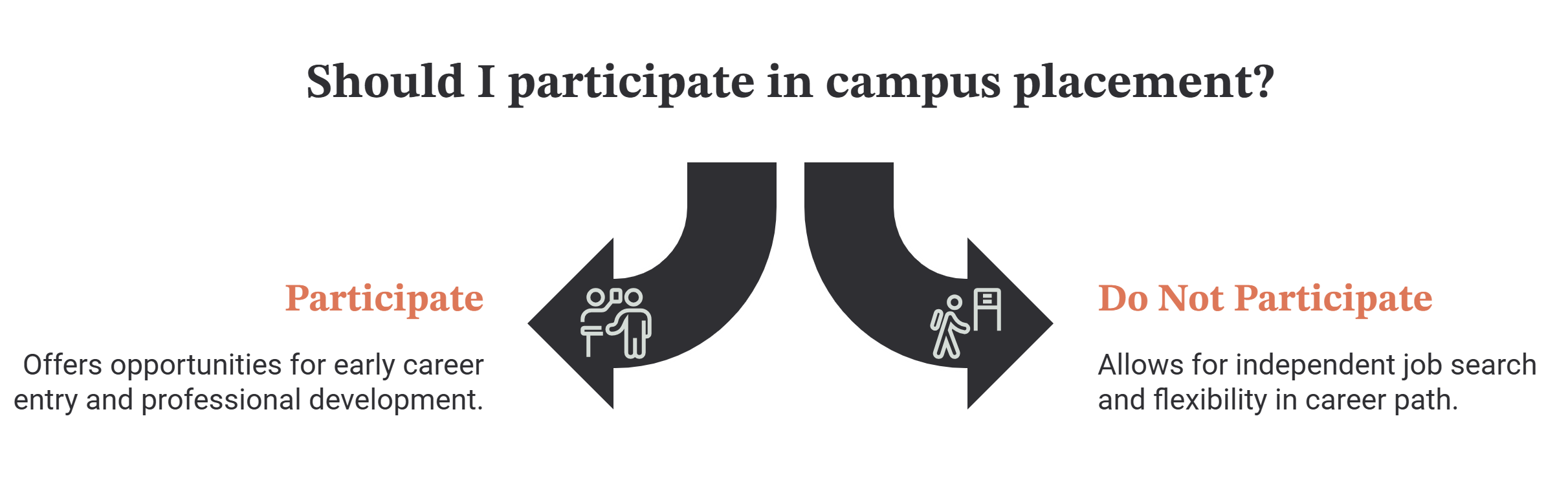
Campus placement is the recruitment process conducted by companies inside colleges and universities to hire students before or soon after graduation.
In simple words, companies visit your campus, conduct tests and interviews, and select students for jobs or internships.
Campus placement is common for students from:
- B.Tech
- MCA
- BCA
- BBA
- MBA
- Commerce
- Science
- Arts
- Management
- Programming and technical backgrounds
The process may vary from company to company, but most recruitment drives test your aptitude, reasoning, communication, technical knowledge, coding ability, and overall personality.
Campus placement is not just about getting a job. It is also about becoming ready for the professional world.
Why Campus Placement Preparation is Important
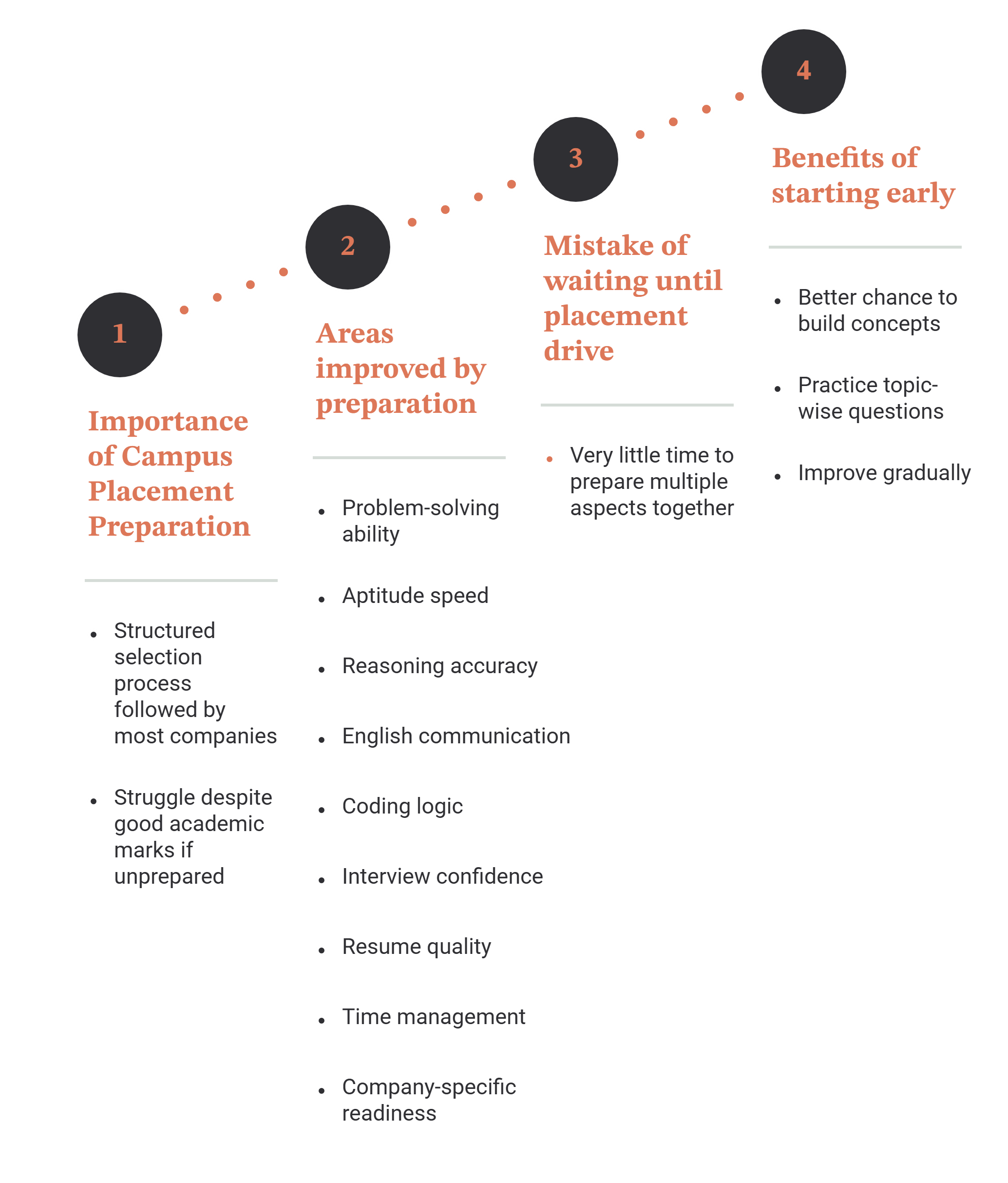
Campus placement preparation is important because most companies follow a structured selection process. If you are not prepared, you may struggle even if you have good academic marks.
Preparation helps you improve:
- Problem-solving ability
- Aptitude speed
- Reasoning accuracy
- English communication
- Coding logic
- Interview confidence
- Resume quality
- Time management
- Company-specific readiness
Many freshers make the mistake of waiting until companies announce the placement drive. By then, there is very little time to prepare aptitude, reasoning, verbal ability, coding, resume, and interviews together.
Starting early gives you a better chance to build concepts, practice topic-wise questions, and improve gradually.
Common Rounds in Campus Placement
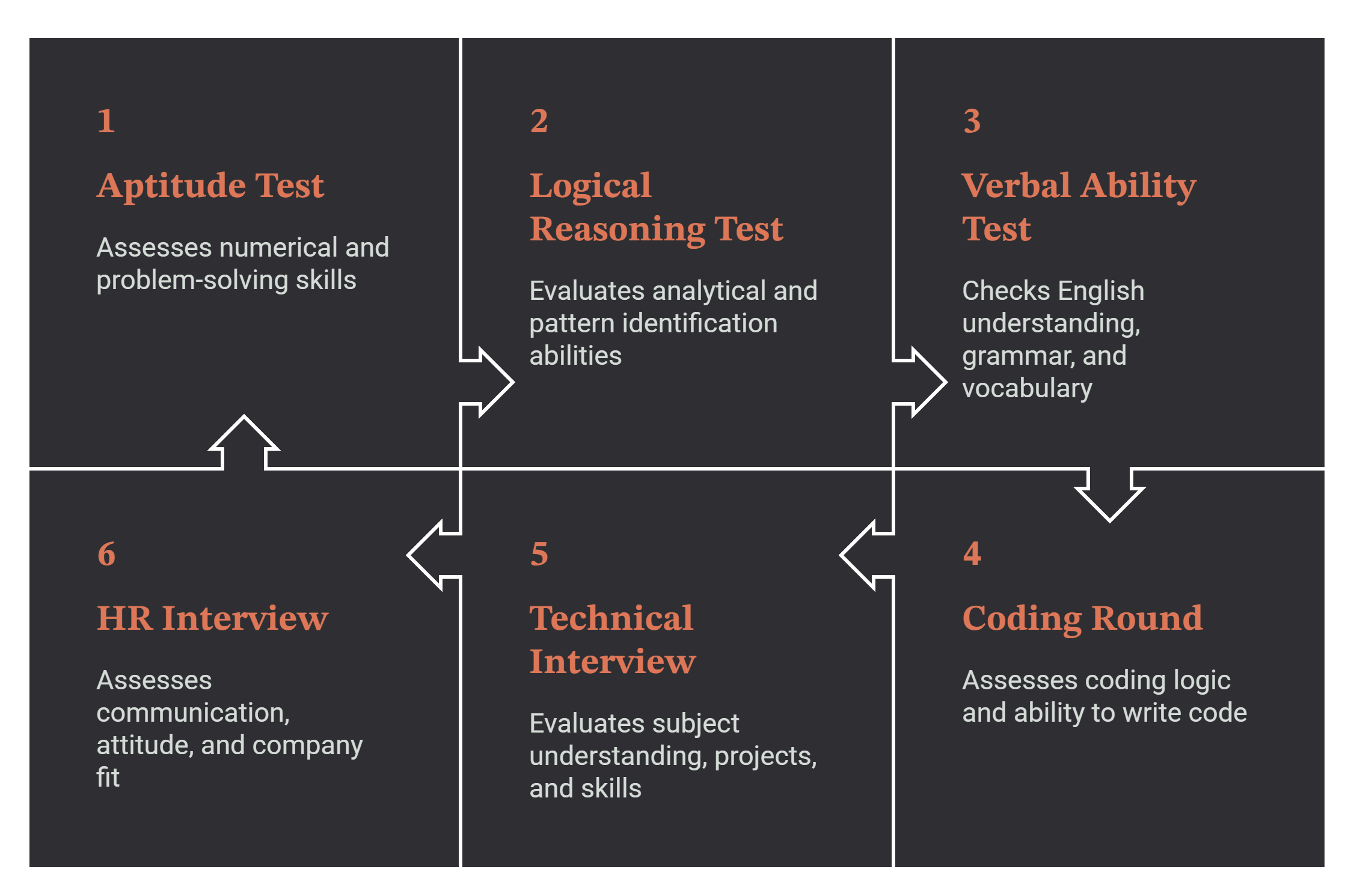
Most campus placement drives include multiple rounds. The exact structure depends on the company and role.
Here are the common rounds freshers should know.
1. Aptitude Test
The aptitude test checks your numerical ability and problem-solving speed.
Common topics include:
- Percentages
- Profit and loss
- Ratio and proportion
- Average
- Time and work
- Time, speed and distance
- Simple interest and compound interest
- Number system
- Data interpretation
- Probability
This is often one of the first screening rounds.
2. Logical Reasoning Test
The reasoning round checks how well you can analyze information and identify patterns.
Common topics include:
- Coding-decoding
- Blood relation
- Direction sense
- Syllogism
- Number series
- Seating arrangement
- Puzzles
- Statement and conclusion
- Data sufficiency
Reasoning becomes easier with regular practice.
3. Verbal Ability Test
The verbal ability round checks your English understanding, grammar, vocabulary, and comprehension.
Common topics include:
- Reading comprehension
- Error spotting
- Sentence correction
- Fill in the blanks
- para jumbles
- Synonyms and antonyms
- Basic grammar
This section also helps in interviews and communication rounds.
4. Coding Round
For technical roles, coding is a major round.
Common topics include:
- Arrays
- Strings
- Loops
- Functions
- Searching
- Sorting
- Recursion
- Hashing basics
- Stack and queue
- Basic data structures
The goal is to check your logic and ability to write working code.
5. Technical Interview
The technical interview checks whether you understand your subjects, projects, programming language, and resume skills.
Common areas include:
- Programming language
- OOPs
- DBMS
- SQL
- Data structures
- Operating systems
- Computer networks
- Projects
- Internships
6. HR Interview
The HR round checks your communication, attitude, confidence, and fit for the company.
Common HR questions include:
- Tell me about yourself
- Why should we hire you?
- What are your strengths?
- What are your weaknesses?
- Why do you want to join this company?
- Are you open to relocation?
- Tell me about your project
Skills You Need for Campus Placements
Campus placement is not based on only one skill. You need a combination of test preparation, technical ability, communication, and confidence.
1. Problem-Solving Skills
Companies want freshers who can think logically and solve problems. Aptitude, reasoning, and coding all test this skill.
2. Communication Skills
Good communication helps in verbal ability tests, HR interviews, group discussions, and workplace conversations.
3. Technical Skills
For technical roles, you should know at least one programming language and basic computer science subjects.
Important areas include:
- Programming basics
- OOPs
- DBMS
- SQL
- Data structures
- Projects
4. Time Management
Placement tests are time-bound. You should know when to solve, skip, and return to a question.
5. Resume Presentation
Your resume should clearly show your education, skills, projects, internships, and achievements.
6. Consistency
Daily practice matters more than last-minute study. FreePare’s streak and progress-tracking features are designed to encourage consistent preparation.
Subject-Wise Preparation Strategy
Campus placement preparation becomes easier when you divide it into subjects.
1. Quantitative Aptitude
Start with basic topics and then move to timed practice.
Important topics:
- Percentages
- Average
- Profit and loss
- Ratio and proportion
- Number system
- Time and work
- Time, speed and distance
- Data interpretation
Preparation tips:
- Learn formulas first
- Solve easy questions
- Move to medium-level questions
- Practice with a timer
- Revise mistakes regularly
2. Logical Reasoning
Reasoning improves through pattern practice.
Important topics:
- Series
- Coding-decoding
- Blood relation
- Direction sense
- Syllogism
- Puzzles
- Seating arrangement
Preparation tips:
- Practice daily
- Use diagrams
- Do not assume extra information
- Track time
- Review wrong answers
3. Verbal Ability
Verbal ability needs regular reading and grammar practice.
Important topics:
- Reading comprehension
- Error spotting
- Sentence correction
- Fill in the blanks
- Para jumbles
- Grammar
- Vocabulary
Preparation tips:
- Read daily
- Revise grammar rules
- Practice comprehension
- Learn words in context
- Avoid random guessing
4. Coding
Coding preparation should begin with one programming language.
Important topics:
- Input-output
- Loops
- Conditions
- Functions
- Arrays
- Strings
- Searching
- Sorting
- Recursion basics
Preparation tips:
- Choose one language
- Write code yourself
- Dry run your logic
- Test edge cases
- Analyze better solutions
How to Start Campus Placement Preparation
Starting placement preparation can feel difficult, but the process becomes simple when you follow the right order.
Step 1: Understand Your Target Companies
Check which companies usually visit your college.
Examples:
- TCS
- Infosys
- Wipro
- Accenture
- Cognizant
- Capgemini
- Deloitte
- HCL
- Tech Mahindra
Do not prepare randomly. Understand the common recruitment pattern first.
Step 2: Build Basic Concepts
Start with aptitude, reasoning, and verbal ability basics.
Do not jump directly to difficult mock tests. First build your foundation.
Step 3: Choose One Programming Language
For technical roles, choose one language and become comfortable with it.
Good options include:
- C
- C++
- Java
- Python
Step 4: Practice Topic-Wise Tests
Topic-wise tests help you improve one area at a time.
For example:
- Percentage test
- Blood relation test
- Reading comprehension test
- Array coding test
FreePare follows a structured flow where students can select a branch, choose a subject, pick a topic, attempt a test, and review performance.
Step 5: Take Mock Tests
Once your basics are clear, start taking mock tests.
Mock tests help you improve speed, accuracy, and exam confidence.
Step 6: Prepare Resume and Interviews
Do not wait until last week. Prepare your resume and interview answers early.
How to Start Campus Placement Preparation from Zero
30-Day Campus Placement Study Plan
If your placement season is near, follow this simple 30-day plan.
Week 1: Build the Base
Focus on:
- Aptitude basics
- Reasoning basics
- Verbal grammar
- Simple coding programs
Daily task:
- Study one topic
- Solve practice questions
- Note mistakes
- Revise formulas or rules
Week 2: Start Topic-Wise Practice
Focus on:
- Time and work
- Speed and distance
- Syllogism
- Puzzles
- Reading comprehension
- Arrays and strings
Daily task:
- Take topic-wise tests
- Practice with timer
- Revise weak areas
Week 3: Add Coding and Technical Subjects
Focus on:
- Programming language
- OOPs
- DBMS
- SQL
- Basic data structures
- Projects
Daily task:
- Solve coding questions
- Revise technical concepts
- Prepare project explanation
Week 4: Mock Tests and Interview Preparation
Focus on:
- Full-length mock tests
- Resume review
- HR questions
- Technical interview questions
- Company research
Daily task:
- Take mock tests
- Analyze wrong answers
- Practice speaking answers
- Revise weak topics
30-Day Campus Placement Preparation Roadmap for Freshers
How to Prepare for Aptitude Round
The aptitude round is often used to filter candidates in the early stage.
Important Aptitude Topics
- Percentages
- Ratio and proportion
- Average
- Profit and loss
- Simple interest and compound interest
- Time and work
- Speed and distance
- Number system
- Data interpretation
- Probability
Aptitude Preparation Tips
- Understand formulas
- Practice basic questions first
- Learn shortcuts only after concepts
- Improve calculation speed
- Take timed tests
- Analyze mistakes
Common Aptitude Mistakes
- Memorizing without understanding
- Not revising formulas
- Spending too much time on one question
- Ignoring data interpretation
- Avoiding weak topics
Aptitude is not difficult if you practice regularly. The key is speed with accuracy.
Quantitative Aptitude Preparation Guide for Campus Placements
How to Prepare for Reasoning Round
Logical reasoning is a scoring section if you practice daily.
Important Reasoning Topics
- Number series
- Alphabet series
- Coding-decoding
- Blood relation
- Direction sense
- Syllogism
- Seating arrangement
- Puzzles
Reasoning Preparation Tips
- Solve different question types
- Use diagrams for family and direction questions
- Practice puzzles slowly at first
- Track time
- Avoid assumptions
Common Reasoning Mistakes
- Reading clues too fast
- Not using diagrams
- Getting stuck on one puzzle
- Assuming extra information
- Ignoring simple topics
Reasoning improves with repetition. The more patterns you solve, the faster you become.
Logical Reasoning Preparation Guide for Campus Placements
How to Prepare for Verbal Ability Round
Verbal ability is important for both written tests and interviews.
Important Verbal Topics
- Reading comprehension
- Error spotting
- Sentence correction
- Fill in the blanks
- Para jumbles
- Vocabulary
- Grammar
Verbal Preparation Tips
- Read short articles daily
- Revise grammar basics
- Practice comprehension questions
- Learn common words
- Analyze wrong answers
Common Verbal Mistakes
- Ignoring English until the last week
- Guessing grammar answers
- Not reading regularly
- Memorizing vocabulary without context
- Skipping para jumbles
Good English preparation also improves your confidence during interviews.
Verbal Ability Preparation Guide for Campus Placements
How to Prepare for Coding Round
Coding preparation should be practical. Watching videos is not enough.
Important Coding Topics
- Loops
- Conditions
- Functions
- Arrays
- Strings
- Searching
- Sorting
- Hashing basics
- Stack and queue
- Recursion basics
Coding Preparation Tips
- Choose one language
- Start with easy problems
- Write code yourself
- Dry run with examples
- Check edge case
- Understand time complexity basics
Common Coding Mistakes
- Learning too many languages
- Copying solutions
- Skipping dry run
- Ignoring edge cases
- Not practicing daily
- Starting advanced DSA too early
For most freshers, strong basics are more important than trying to solve very advanced problems immediately.
Coding Round Preparation for Freshers: Complete Guide for Campus Placements
Resume Preparation for Freshers
Your resume is often the first thing a recruiter or interviewer sees.
A good fresher resume should be simple, clear, and honest.
What to Include in a Fresher Resume
- Name and contact details
- Career summary
- Education
- Technical skills
- Projects
- Internships
- Certifications
- Achievements
- LinkedIn or GitHub profile
Resume Tips
- Keep it one page
- Use simple formatting
- Mention real skills
- Explain projects clearly
- Avoid spelling mistakes
- Use a professional email ID
- Do not add fake skills
Common Resume Mistakes
- Writing copied objectives
- Adding skills you cannot explain
- Making the resume too long
- Using too many colors
- Not preparing project explanation
FreePare includes resume-building support as part of its student-focused preparation ecosystem.
Resume Guide for Freshers: How to Make a Job-Ready Resume for Campus Placements
Technical Interview Preparation
The technical interview checks your actual understanding.
Topics to Prepare
- Programming language
- OOPs
- DBMS
- SQL
- Data structures
- Operating systems
- Computer networks
- Projects
Technical Interview Tips
- Know your resume
- Prepare your projects
- Revise basic concepts
- Practice explaining code
- Do not fake answers
- Be honest if you do not know something
Project Questions You Should Prepare
- What is your project about?
- Why did you build it?
- What technologies did you use?
- What was your role?
- What challenges did you face?
- How can it be improved?
Interviewers often ask from your own resume, so every line should be explainable.
Technical Interview Preparation for Freshers: Complete Campus Placement Guide
HR Interview Preparation
The HR interview checks your confidence, attitude, and communication.
Common HR Questions
- Tell me about yourself
- Why should we hire you?
- What are your strengths?
- What are your weaknesses?
- Why this company?
- Are you comfortable with relocation?
- Where do you see yourself in five years?
HR Interview Tips
- Keep answers simple
- Do not memorize word by word
- Speak honestly
- Maintain professional body language
- Know the company basics
- Prepare questions for the interviewer
Common HR Mistakes
- Giving copied answers
- Speaking too fast
- Sounding overconfident
- Not knowing your resume
- Criticizing college or teachers
- Not preparing self-introduction
The HR round is not about perfect English. It is about clarity, honesty, and confidence.
HR Interview Questions and Answers for Freshers in Campus Placements
Mock Test Strategy for Campus Placements
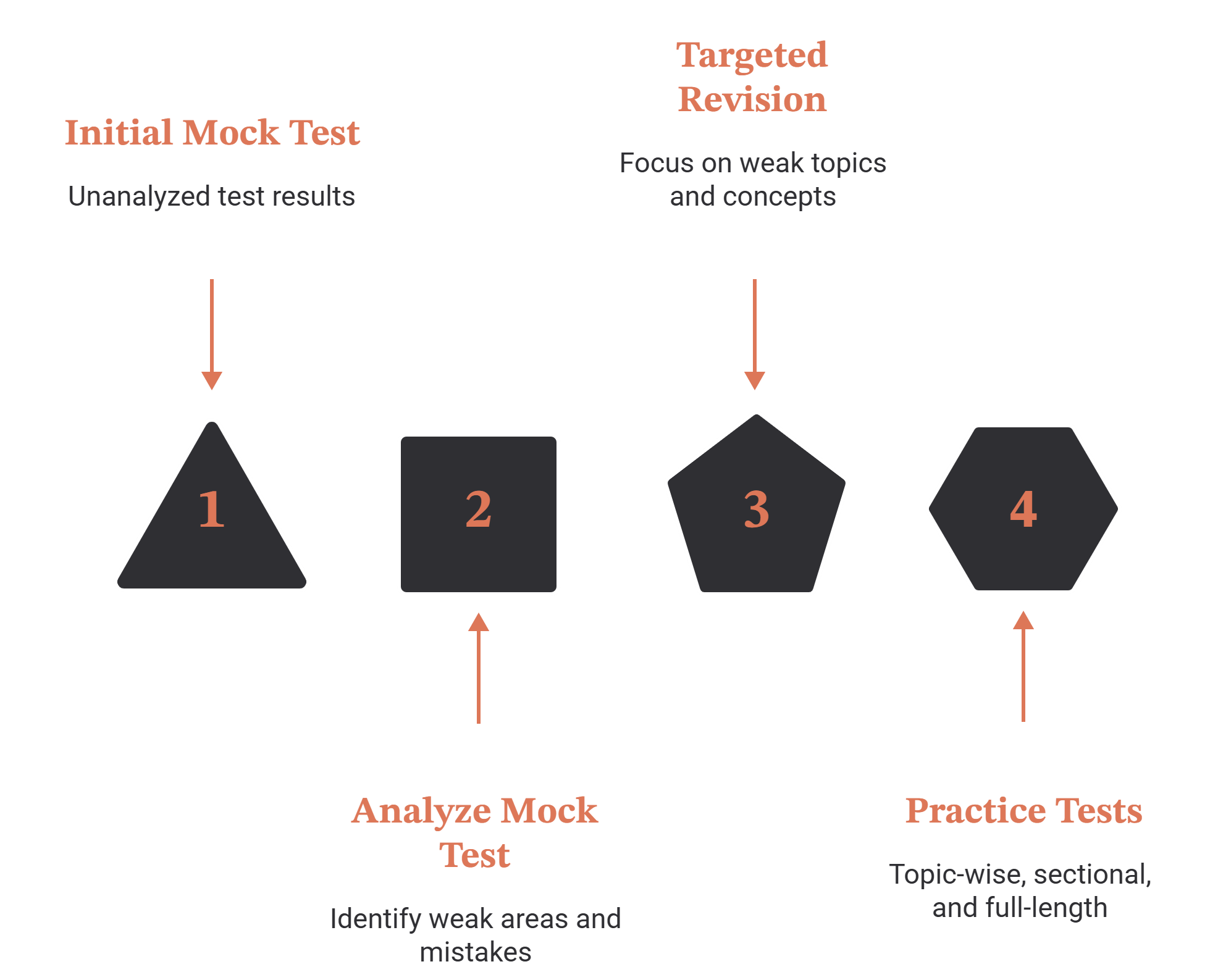
Mock tests are an important part of placement preparation.
But mock tests only help when you analyze them properly.
Types of Mock Tests
- Topic-wise tests
- Sectional tests
- Full-length mock tests
- Company-wise practice tests
- Coding practice tests
How to Analyze Mock Tests
After every mock test, check:
- Which topics were weak?
- Which questions took too much time?
- Where did you make silly mistakes?
- Was it a concept mistake or calculation mistake?
- Did you guess too much?
- What should you revise next?
Mock Test Tips
- Start with topic-wise tests
- Move to sectional tests
- Attempt full mocks later
- Review every wrong answer
- Track progress weekly
FreePare’s test engine supports topic-wise practice, test submission, attempt history, progress tracking, and question reporting, which helps students practice and improve systematically.
How to Use Mock Tests for Campus Placement Preparation
Common Mistakes Freshers Should Avoid
Many students work hard but still struggle because their preparation is not structured.
Avoid these mistakes:
- Starting too late
- Ignoring aptitude basics
- Skipping reasoning practice
- Leaving verbal ability for the last week
- Learning too many programming languages
- Taking mock tests without analysis
- Preparing resume at the last moment
- Writing fake skills
- Not preparing project explanation
- Memorizing HR answers
- Not checking company patterns
- Comparing yourself with others
Campus placement preparation is not about doing everything at once. It is about doing the right things in the right order.
How FreePare Helps in Placement Preparation
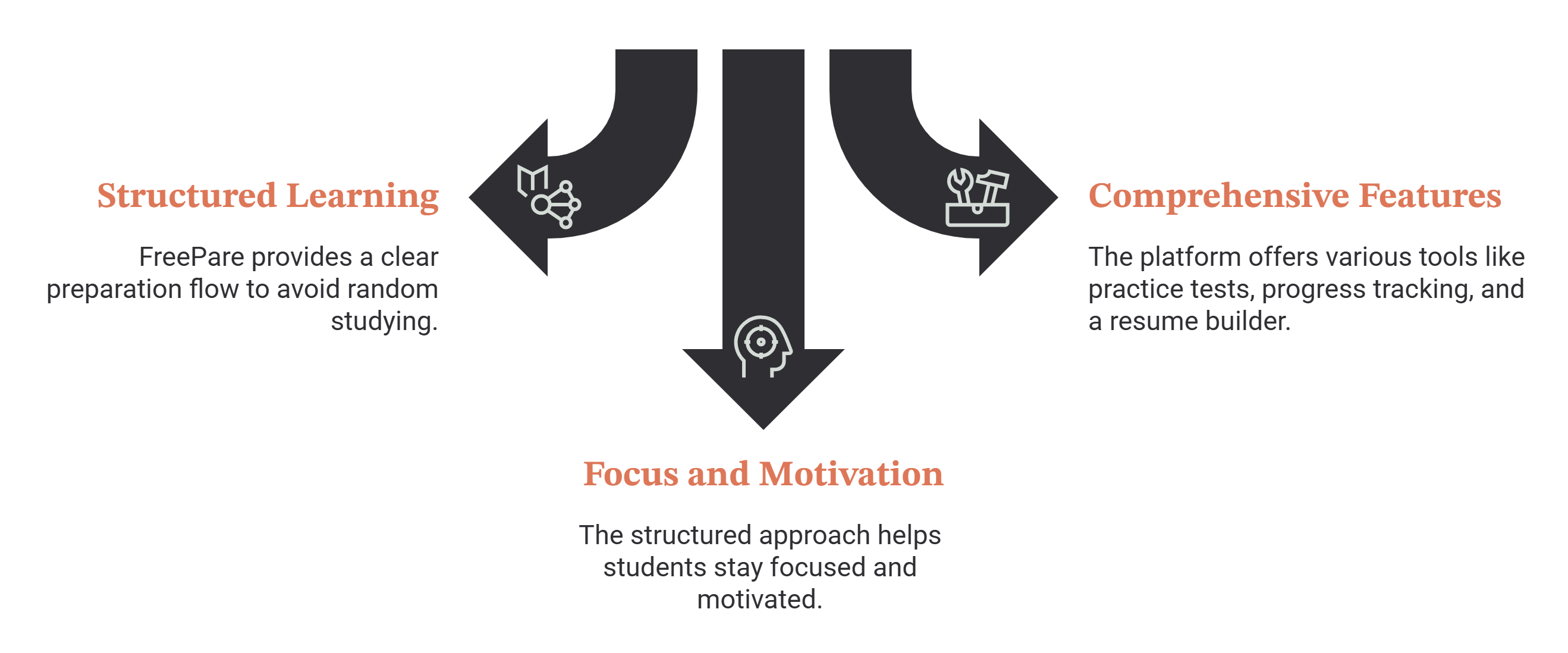
FreePare helps students prepare in a structured way instead of studying randomly.
The platform is designed around a simple preparation flow:
- Choose exam branch
- Select subject
- Pick topic
- Attempt test
- Submit and review
- Track progress
- Continue practice
According to the FreePare product documentation, the platform includes topic-wise practice tests, progress tracking, a personal dashboard, daily streak counter, search, resources, and resume builder. It is built for free, structured, exam-relevant practice with zero friction for students.
This type of structure helps freshers stay focused because they always know the next step.
Conclusion
Campus placement preparation may look difficult in the beginning, but it becomes manageable with the right roadmap.
Start with the basics. Prepare aptitude, reasoning, and verbal ability. Add coding and technical subjects gradually. Take topic-wise tests. Attempt mock tests. Analyze mistakes. Prepare your resume early. Practice interview answers.
Do not wait for the placement season to begin.
The earlier you start, the more confident you become.
Campus placement success is not about one lucky day. It is about regular practice, smart revision, and clear preparation.
FAQs on Campus Placement Preparation
1. How should I start campus placement preparation?
Start with aptitude, reasoning, and verbal ability basics. Then add coding, technical subjects, mock tests, resume preparation, and interview practice.
2. Which subject is most important for campus placements?
Aptitude, reasoning, and verbal ability are important for most companies. For technical roles, coding and core technical subjects are also important.
3. How many months are enough for placement preparation?
Two to three months of focused preparation can help many freshers build a strong foundation. Starting earlier gives better results.
4. Is coding compulsory for campus placements?
Coding is important for technical roles. For non-technical roles, aptitude, reasoning, communication, and domain knowledge may be more important.
5. Are mock tests important for placements?
Yes. Mock tests improve speed, accuracy, time management, and exam confidence. But analysis after the test is more important than just taking the test.
6. What should I include in a fresher resume?
A fresher resume should include contact details, education, skills, projects, internships, certifications, achievements, and relevant profile links.
7. How can I improve aptitude for campus placements?
Learn one topic at a time, revise formulas, solve topic-wise questions, take timed tests, and analyze your mistakes.
8. How can I prepare for HR interviews?
Prepare your self-introduction, strengths, weaknesses, project explanation, company-related answers, and common HR questions.
9. What is the best daily routine for placement preparation?
A simple routine can include aptitude, reasoning, verbal ability, coding or technical revision, and mistake analysis every day.
10. Can I prepare for campus placements from zero?
Yes. Start with basic topics, practice daily, take topic-wise tests, review mistakes, and gradually move to mock tests and interviews.
Tags: campus-placement, freshers-placement-guide, placement-roadmap